Research Sourcing
The Weight Loss Compound Everyone Is Researching. You Order 10mg. The Certificate Says 11.95mg.
Almost nobody in this category reads the certificate. The people who do find something odd about this one: the vial holds more than the label claims. Here is the number, the lot it came from, and how to check any supplier yourself in about a minute.
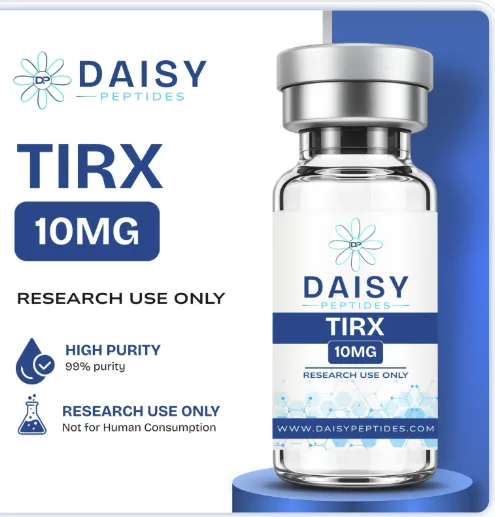 View the listing and its certificate →
The weight loss research compounds are the most in demand chemicals on the planet right now. Legitimate supply has never caught up with the interest, and that gap is filled by whoever is willing to fill it.
Here is what makes this category different from every other one. The compounds ship under codes. TIRX. RETX. SEMX. CARG. You cannot google a brand name and read reviews, because the name on the vial is a code, not a brand.
So the certificate is not a nice extra. It is the only thing in the entire transaction that tells you what is actually inside.
And most people never open it.
The certificates are published, not sent on request.
Lot number, accession number, report date and the testing parameters, all on one page.
See the compounds →1Purity is a ratio. It is not an amount.
Nearly every listing in this category leads with one number. Ninety nine percent pure. It goes on the product page, in the ad, and on the certificate.
Now ask the obvious follow up. Ninety nine percent of how much?
Purity answers one question only: of the peptide that is in this vial, how much of it is the right molecule. It is a percentage of the contents. It says nothing about how much is in there.
Think of a glass of orange juice. You can say the juice is 99% pure and be completely correct while the glass is half empty.
Purity tells you what it is. Net content tells you how much. Two numbers, two questions.
2The number worth looking twice at
Net content is the second measurement, and it is the one almost nobody publishes, because it costs more to run and it is the one that can embarrass you.
On the TIRX batch certificate the label claim is 10mg. The reported net content is 11.95mg.
That is not a rounding difference. The vial holds roughly nineteen percent more than the label promises. A second published batch reads the same way, 11.98mg against a 10mg claim. RETX comes in at 10.39mg.
A supplier who publishes net content is showing you a number they could have quietly left off. That is the tell.
3What the identity line does
Because these compounds ship under codes, the certificate carries an identity line that says what the code actually refers to. On the TIRX document it reads GLP TZ. On RETX it reads GLP RT.
That line is doing the work the product name cannot. Without it, a code is just a code, and you are trusting a label on a vial that anyone could print.
Match the identity line to the compound you meant to order. If there is no identity line, there is nothing to match.
Figures taken from the batch certificate published on the Daisy Peptides lab reports page.
The documents are published, not promised.
Each published certificate carries its lot number, so you can match it against the vial that arrives.
See the compounds →4The lot number is the entire point
A certificate with no lot number on it is a marketing document. It describes a batch that was tested once, possibly a year ago, possibly not the one going into your box.
A lot number turns the document into a claim about your specific vial, and it gives you something to check when the package lands.
If the number on the paperwork does not match the number on the vial, the paperwork is about somebody else's batch.
5The sixty second check
You do not need to understand chromatography to do this. Open the certificate and look for four things.
- A lot number. Then check it against the vial when it arrives.
- A net content figure. Not just a purity percentage. If it is missing, the test was not run.
- An identity line. Especially in this category, where the product name is a code.
- A report date and an accession number. That is what makes a document traceable rather than decorative.
Four things, under a minute. It is the fastest way to sort suppliers in a category where the product names tell you nothing.
| On the certificate | Daisy Peptides | Typical supplier |
|---|---|---|
| Purity figure | Published, 99.88% on this lot | Usually published |
| Net content against label | Published, 11.95mg on a 10mg claim | Usually absent |
| Identity of a coded product | Stated on the document | Often absent |
| Lot and accession number | Both, with a report date | Frequently neither |
| Returns window | 15 days money back | Usually none at all |
Check the paperwork first. Then decide.
Nothing here asks you to trust a claim. Open the certificate, read the two numbers, and match the lot when it arrives.
See the compounds →
Comments
I have bought in this category for two years and genuinely did not know net content was a separate test from purity. Went back through old certificates and not one of them listed it.
Same. I had been comparing suppliers on the purity number alone the whole time.
The coded names are the part that always bothered me. Nice to see an identity line on the document that actually says what the code is.
Checked the lot number against the vial when mine arrived and it matched. First time I have bothered doing that and it took ten seconds.
Worth doing every time now. If it does not match you have a reason to use the returns window.
Over on the label rather than under was not what I expected to find. That is the first time I have seen that published anywhere.